Monday, April 21, 2008

Lantern


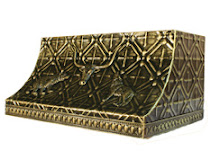
This gorgeous tin lantern can be found for purchase here from Carl Giordano TinSmith. His work is quite detailed, and he seems well-versed in the periods he aims for. The site lists all kinds of lighting, including lanterns, candellabras and chandeliers - Worth checking out!

Tuesday, March 25, 2008

Giraffe!


This excellent hand made tin giraffe is for sale at Send Africa

Friday, March 14, 2008

Wow, this is p-r-e-t-t-y.....


Tin Earthenware Glazed Dish
Winterthur, Switzerland, AD 1681


From the British Museum online comes this gorgeous find, a tin earthenware glazed dish - I had no idea tin anything was applied to ceramics of any kind, so this just knocked me out! Isn't it pretty? This is how it's done, accroding to the article:

A glaze containing tin oxide is applied to dark-coloured earthenware bodies to produce an opaque white surface, in imitation of porcelain. The glaze can subsequently be decorated with metal oxide pigments. In Europe this technique had originated in Islamic Spain; it had spread to Italy by the fifteenth century and throughout the northern countries by the late sixteenth century. It is known variously as maiolica, faience or Delftware according to the country of origin.

Thursday, March 13, 2008

Historical Pierced Tin Plates

The Mercer Museum offers pierced tin plates for purchase.


Years ago, we were invited to closely study the extensive pierced metal collection at this unique museum that contained the life-long collections of Henry Chapman Mercer, renowned inventor and ceramist. We were requested to adapt some of the most noteworthy designs. We now offer these very special designs in pierced tin to grace your own home.


Monday, March 10, 2008

The Use and Care of Tinned Metals

Tripped across a handy little article today on the use and care of tinned metals, covering everything from cookware to cutters, and when to (and not to) re-tin, below...

When Not to Re-Tin

In the case of copper, the tin prevents reaction with acidic foods. If you're not cooking acidic foods, then it's not necessary to have a tin lining. Also, if the copper pot is going to be subjected to very high temperatures, such as for making hard candy, the copper needs to be bare in order to support the high temperatures. And bare copper is desirable in making meringues, because of its reaction to egg whites, which makes them peak faster and longer.

In the case of steel, the tin coating basically prevents rusting and reaction with acidic foods. If you are using the pan for baking and you keep it dry and well oiled when in storage, re-tinning, though desirable, is not necessary. Any bit of rust can be scoured off.

In the case of antiques, we don't recommend retinning, as doing so is likely to diminish the item's value as an antique. If you plan to use it, however, and it is in good condition, then retinning may prove worthwhile.

Friday, March 7, 2008

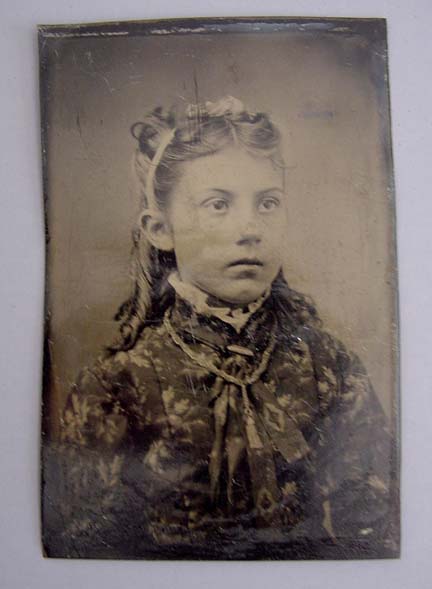
Victorian Tin Types

Poking about, I came across an interesting thing called Victorian Tin Types and, having no idea what they were, I decided to poke about some more...

I found a brief history of tin types at Grand Memories: A tintype is a photograph made on a sheet of iron (not really tin) instead of on paper. In 1856 Hamilton Smith patented the process for producing tintypes. Most tintypes were sepia colored (light brown). The most common size was about 2 ½ " x 3 ½", although they were made much smaller for lockets and as large as 5x7. Tintypes were popular from1856 until the late nineteenth century when cheaper paper methods and better photographic equipment caused them to disappear as "old technology."


lovely tin type online

New Uses for Tin Ceiling Tiles

I tripped across quite a nice post in a blog from DYI Maven, New Uses for Tin Ceiling Tiles. There are several photos but this is the one that grabbed my attention for its truly creative and inspired use and design. What do you think?